A steak can look excellent in the tray and still be the wrong choice for your dinner. That is usually where people come unstuck. If you have ever wondered how to choose steak cuts without wasting money or ending up with something tough, the answer is not choosing the most expensive piece and hoping for the best. It is about matching the cut to how you cook, what texture you enjoy and how much fat you actually want on the plate.
A proper butcher will always tell you there is no single “best” steak. There is only the best one for the meal you have in mind. A quick midweek fry-up, a family steak night, a summer barbecue and a special occasion supper all call for slightly different choices.
How to choose steak cuts without overpaying
Price matters, but it should not be the only thing guiding you. Some cuts cost more because they are naturally more tender and in shorter supply. Fillet is the obvious example. It is lean, soft and easy to cook, so it commands a premium. That does not mean it gives the deepest beef flavour, or that it is the right buy for everyone.
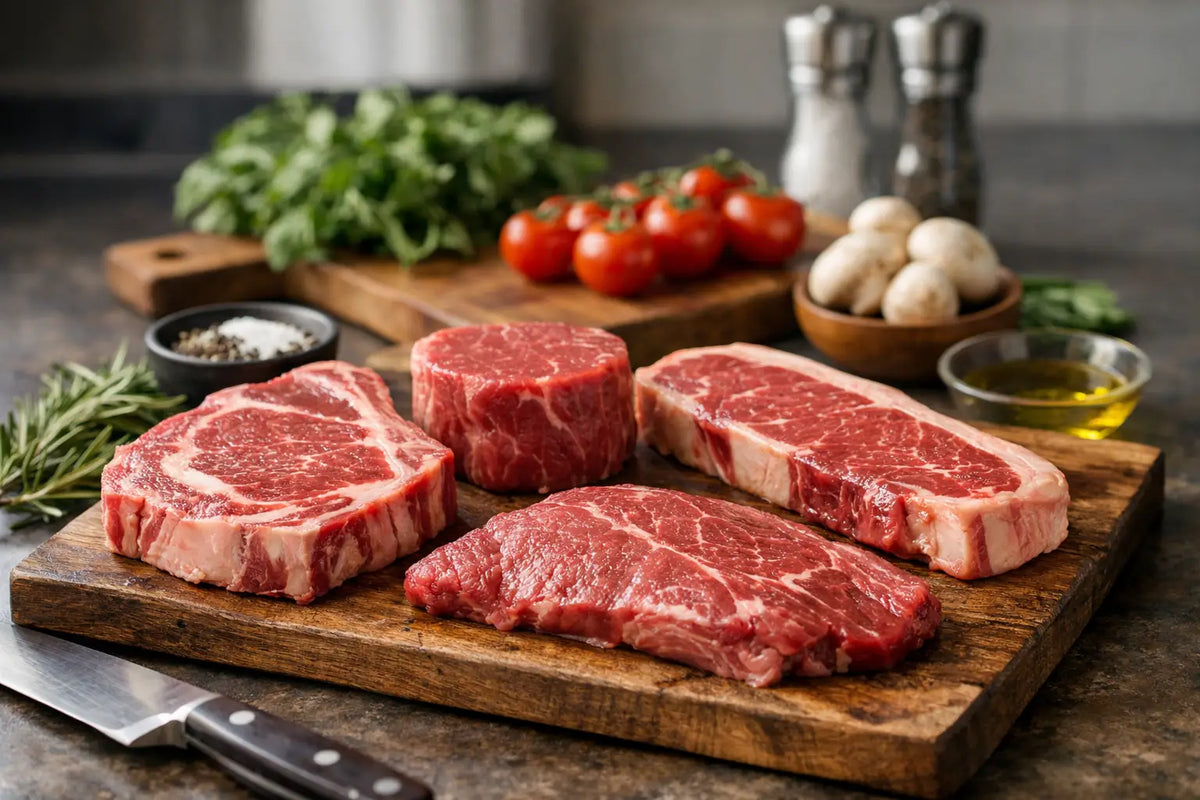
Ribeye, for many people, gives the best balance of flavour and tenderness. It has generous marbling, which is the fine streaking of fat through the meat. As that fat melts during cooking, it keeps the steak juicy and adds richness. If you want a steak that feels like a treat and forgives slight overcooking better than leaner cuts, ribeye is often a safe bet.
Sirloin sits in the middle nicely. It has good beefy flavour, a firmer bite than fillet and usually a strip of fat along the edge that adds character during cooking. It is a popular choice because it feels special without reaching the highest price point. For many households, it is the practical answer when you want a proper steak supper without stretching the budget too far.
Rump is where value starts to come into its own. A good rump steak has plenty of flavour, but it tends to be a little less tender than sirloin or fillet. Cook it carefully and slice it properly, and it can be excellent. Buy it expecting luxury softness, though, and you may be disappointed. That is the trade-off.
Then there is bavette, hanger or flat iron, depending on what your butcher prepares and stocks. These cuts are often a favourite with people who care more about flavour than showing off. They can be superb, but they benefit from confident cooking and correct slicing across the grain. They are not difficult, but they do ask for a bit more attention.
What to look for when choosing steak
When learning how to choose steak cuts, start with appearance. Good steak should look fresh, well-trimmed and evenly cut. A steak that is thicker at one end than the other is harder to cook evenly, especially in a frying pan.
Marbling is one of the first signs worth checking. Fine, even fat running through the meat usually means better flavour and juiciness. That said, more marbling is not automatically better for every shopper. If you prefer a leaner steak or you are buying for someone who trims every bit of fat from the edge, fillet or a lean sirloin may suit better than ribeye.
Thickness matters as much as the cut itself. Thin steaks cook quickly, but they leave little room for error. A thicker steak is easier to brown on the outside while keeping the middle pink. If you like medium-rare or medium, a thicker cut makes life simpler.
Ageing can make a difference too. Properly aged beef develops deeper flavour and better tenderness. Not every customer asks about it, but it is one of the reasons butcher’s steak often eats better than a supermarket equivalent that looks similar at first glance.
Match the cut to the cooking method
One of the most common mistakes is choosing a steak first and deciding how to cook it later. It works better the other way round.
If you are pan-frying, sirloin, fillet, rump and ribeye all work well. Pan-frying suits steaks that can take a good crust and cook quickly. Ribeye does especially well in a hot pan because the marbling helps keep it succulent.
If you are cooking on the barbecue, choose cuts with a bit of fat and substance. Ribeye and sirloin are usually reliable because they can stand up to fierce heat. Lean fillet can still be lovely on the barbecue, but it is less forgiving. One minute too long and you lose the texture you paid for.
If you want steak for slicing into salads, wraps or grain bowls, rump, bavette or flat iron can be very good value. These cuts often deliver plenty of flavour, and once sliced thinly against the grain, they eat beautifully. They are especially handy if you are feeding several people and want steak to go further.
For a date night or a special meal where tenderness is the main event, fillet makes sense. It is refined, lean and easy to serve neatly. Just remember that flavour is gentler than in ribeye or sirloin, so it often benefits from a peppercorn sauce, garlic butter or a well-seasoned pan.
The main steak cuts and who they suit
Fillet suits people who want tenderness above all else. It is lean and elegant, but because it carries less fat, it has a milder flavour. It is ideal for those who dislike chewy texture or visible fat.
Sirloin suits households that want a dependable all-rounder. It offers a good balance of tenderness, flavour and value, which is why it remains one of the most popular choices at the counter.
Ribeye suits those who want rich flavour and a juicy finish. If you enjoy a steak with a bit more character and do not mind some fat, it is hard to beat.
Rump suits shoppers who care about flavour and sensible pricing. It may need a little more care with cooking and resting, but it rewards that effort.
Flat iron, bavette and similar butcher’s cuts suit confident cooks and steak lovers who know flavour is not always tied to price. These are often the cuts that become household favourites once people try them properly.
Ask yourself three practical questions
Before you buy, think about who you are feeding, how you plan to cook it and what matters most: tenderness, flavour or value. Most people can only have two of those at the top of the list without compromise.
If tenderness and leanness matter most, look towards fillet. If flavour and juiciness matter most, ribeye is often the answer. If you want a strong all-round option that keeps an eye on cost, sirloin or rump usually makes more sense.
Portion size matters too. A large steak is not always the better buy if half of it goes uneaten. Equally, tiny steaks can feel poor value if they shrink dramatically in the pan. A butcher can help you choose a sensible thickness and size based on whether the steak is the whole meal or part of a larger spread.
Why a butcher’s advice still makes a difference
This is one area where local knowledge genuinely helps. If you walk into a proper butcher’s shop and say what meal you are planning, you can usually save yourself both money and disappointment. A butcher can point you towards a cut that suits your pan, your barbecue, your budget and the people you are feeding.
At Reed’s Family Butchers, that sort of guidance is part of the service. Some customers want steaks for a Friday night treat, some want bulk value for the freezer, and some want leaner options for a high-protein meal plan. Those are not the same purchase, and they should not be treated as if they are.
The benefit is not only choosing the right cut. It is getting it prepared properly, cut evenly and fresh for when you need it. That is the sort of detail that improves the final meal before you have even heated the pan.
A few easy mistakes to avoid
Do not buy fillet expecting the boldest beef flavour. Do not buy ribeye if everyone at the table dislikes visible fat. Do not buy rump and then cook it as if it were fillet. And do not judge steak on colour alone, because marbling, thickness and preparation matter just as much.
Also, give some thought to resting time. Even the right cut can disappoint if it is rushed from pan to plate. A few minutes of rest helps the juices settle and improves texture.
The best steak is rarely the most expensive one in the cabinet. It is the one that suits your taste, your cooking method and your budget well enough that you would happily buy it again. Once you start choosing steak that way, the whole thing becomes much simpler and a lot more enjoyable.

Share:
Why Ready Meals from Butchers Are Better
Butcher vs Supermarket Meat: What Changes?