A good stew is usually won or lost at the butcher’s block, not on the hob. If you’ve ever asked what cut is best for stew, the short answer is this: choose a hardworking cut with enough fat and connective tissue to soften slowly and give the gravy proper depth.
That is why the best stewing beef rarely looks like the neatest or leanest piece in the counter. For stew, you want flavour first. Time and gentle cooking will take care of tenderness, but only if you start with the right cut.
What cut is best for stew beef?
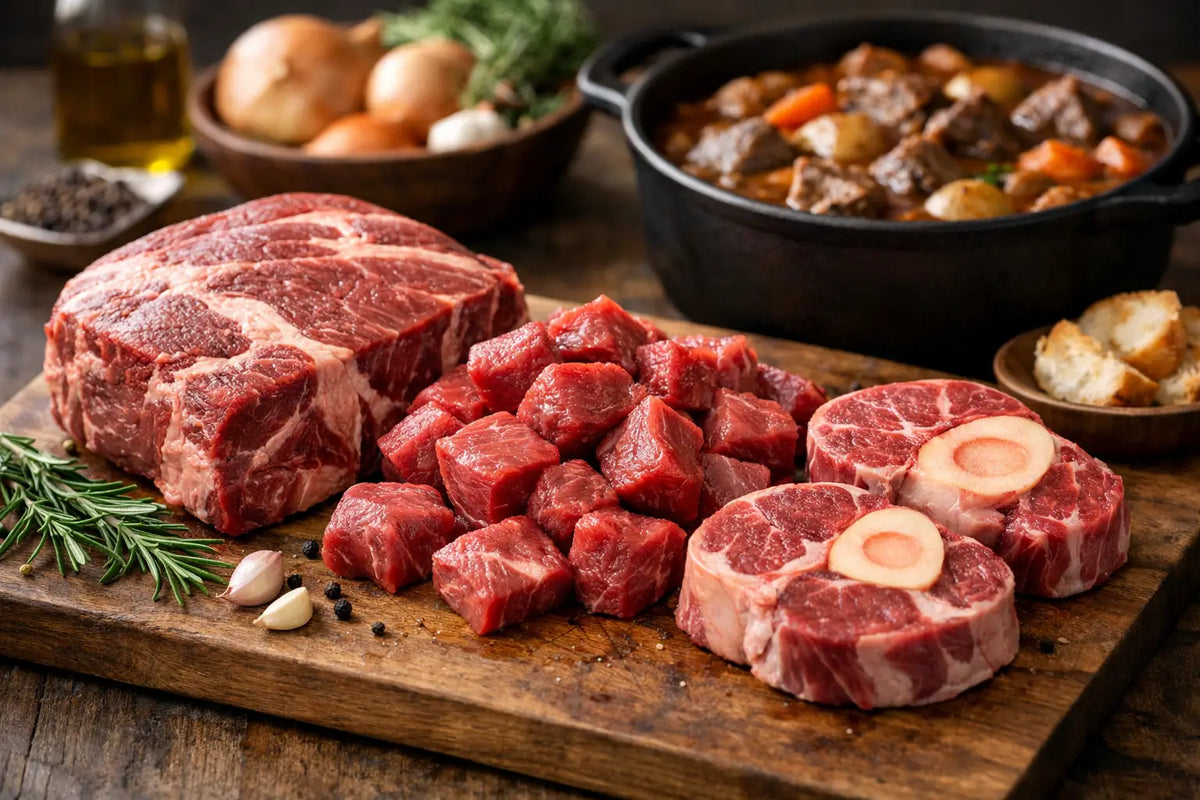
For most home cooks, chuck is the best all-round cut for stew beef. It comes from the shoulder, which means the muscle has done plenty of work. That gives it strong beefy flavour, good marbling and enough collagen to break down during slow cooking. After a couple of hours, that once-firm meat turns soft and rich, and the cooking liquor becomes fuller and silkier too.
Shin is another excellent choice, especially if you like a really deep, savoury stew. It has plenty of connective tissue, so it needs patient cooking, but the reward is a fuller texture and a proper old-fashioned finish. If you have ever had a stew where the sauce seemed naturally glossy and rich without much fiddling, there is a fair chance a cut like shin was doing the heavy lifting.
Brisket can also work very well. It has a lovely beef flavour and softens beautifully when cooked low and slow. The trade-off is that it can have a looser grain than chuck, so it may need a bit more care when trimming and portioning.
In most cases, a well-prepared diced chuck or braising steak is the safest bet for a family stew. It offers the best balance of flavour, tenderness and value.
Why tougher cuts make better stew
This is the bit that catches people out. Lean, expensive cuts are not better for every job. In a quick fry-up or a steak dinner, tenderness straight away matters. In a stew, you are cooking for long enough to transform tougher cuts into something far more satisfying.
Hardworking muscles contain collagen, which slowly melts into gelatine. That is what gives stew its comforting body. It is also why a stew made with the wrong cut can taste thin, even if you season it well. A lean frying steak may seem like a treat, but after a long simmer it often turns dry and stringy rather than soft.
So when deciding what cut is best for stew, think less about tenderness at the start and more about what the meat becomes after two or three hours.
The best beef cuts for stew, compared
Chuck is the dependable favourite because it gives you a bit of everything. It has good flavour, cooks evenly and suits most recipes, whether you are making a classic beef and ale stew or something with root vegetables and herbs.
Shin has the richest character of the lot. If you want a stew for a cold evening that tastes as though it has been cooked in a farmhouse kitchen all day, shin is hard to beat. It does need time, though. Rush it and it will stay firm.
Brisket sits somewhere in between. It brings plenty of flavour and can be wonderfully soft, but it benefits from careful trimming and gentle handling. It is a very good choice if you enjoy a stew with fuller strands of beef rather than neat cubes.
Skirt is sometimes overlooked, but it can be excellent in the right stew. It has strong flavour, though its grain is more obvious and it can be a little less uniform in texture. For some cooks that is part of the appeal. For others, chuck is easier to manage.
If you are buying from a proper butcher, ask for braising or stewing steak and explain what you are making. A good butcher will guide you to the cut that suits your cooking time and budget rather than simply selling the dearest piece.
What cut is best for stew if you want value?
For value, chuck still comes out on top. It gives a generous return in both flavour and texture without the price of premium roasting or steak cuts. That matters if you are feeding a family and want a meal that feels hearty without costing the earth.
Shin can also be good value, especially if you are happy to cook low and slow and let the cut do its work. You are paying for character rather than instant tenderness, which is exactly what stew needs.
The main mistake is buying something too lean because it looks tidy, then having to rescue the dish with stock cubes, gravy thickener or extra fat. Starting with the right cut is usually the cheaper route in the end.
How your cooking method changes the answer
The best cut partly depends on how you cook your stew. If you are using a casserole dish in the oven for several hours, shin and chuck are both ideal. They have time to relax, soften and enrich the gravy.
If you are using a slow cooker, chuck is often the easiest choice because it stays juicy and holds its shape well. Shin works too, but some people prefer the cleaner, more even finish of chuck in a slow cooker.
If you are short on time and only planning to simmer for an hour or so, no traditional stewing cut will be at its best. That is not because the meat is poor quality. It simply has not had enough time to break down. In that case, it is better to change the dish than force a stew to cook too quickly.
Pressure cooking changes things a bit. Cuts like shin can become tender much faster, though you may lose some of the slow-developed character you get from a long oven braise. It is a useful option on a busy day, but classic stew still benefits from patience.
How to choose stewing beef at the counter
Look for beef with a good deep colour and some marbling running through it. You do not want huge lumps of hard fat, but you do want a bit of intramuscular fat. That is where much of the flavour lives.
Uniform pieces help with even cooking, especially if the beef is already diced. If the cubes are all different sizes, the smaller ones may dry out before the larger ones are ready. This is one of the reasons many shoppers prefer buying from a butcher who prepares meat properly rather than grabbing a tray at random.
It is also worth asking whether the cut is best for a quick braise or a long stew. That small conversation can make all the difference to the finished meal.
Common mistakes when buying beef for stew
The first mistake is choosing lean beef because it looks premium. In a stew, lean often means dry. The second is trimming off every bit of fat before cooking. Some trimming is sensible, but removing all of it strips away flavour.
Another common issue is cutting the meat too small. Tiny cubes can break up and dry out. Larger chunks usually give a better result, especially in a long-cooked family stew.
Then there is the temptation to blame the recipe when the real issue was the cut. If the beef stays tough, it often means one of two things: either the cut needed more time, or it was never suited to stewing in the first place.
A word on lamb and other stews
Although most people asking what cut is best for stew mean beef, the same principle applies to lamb. Shoulder and neck are both excellent for lamb stew because they carry flavour and soften beautifully over time. The best stews nearly always start with cuts that need a little patience.
That old-fashioned approach still holds up because it works. Good stew is not about flashy ingredients. It is about using the right cut, cooking it properly and letting simple things turn into something generous and satisfying.
If you are ever unsure, ask your butcher what they would put in their own pot at home. That answer is usually far more useful than chasing the leanest cut in the chiller cabinet, and it is the sort of advice a proper local butcher is always happy to give.

Share:
Essex Butcher Meat Trays Worth Buying
Why Locally Sourced Beef Essex Matters