Few things are more disappointing than paying for a good roasting joint and pulling out something dry, grey and chewy. A proper guide to roasting beef joints should make life simpler, not more complicated - and the good news is that great roast beef usually comes down to choosing the right cut, getting the temperature right, and leaving it to rest long enough before carving.
At the butcher’s counter, one of the first questions we hear is, “Which joint should I buy?” That matters more than any fancy trick. Different beef joints roast differently, and the best one for your table depends on what you want from the meal. If you like neat slices and consistent texture, topside and silverside are reliable family favourites. If flavour is your priority, a rib joint or sirloin gives you a richer result with a little more natural fat. If you want something leaner and good value, top rump can be an excellent middle ground.
Choosing the right cut in this guide to roasting beef joints
Leaner joints such as topside, silverside and top rump are popular because they carve well and make lovely leftovers for sandwiches the next day. The trade-off is that they can dry out if overcooked, so they suit people who are happy serving beef pink or medium rather than well done. They also benefit from careful resting, which helps the juices settle back through the meat.
Rib and sirloin are more forgiving. Because they carry more marbling and outer fat, they stay succulent more easily and bring a fuller beef flavour to the table. They usually cost a bit more, but for a special Sunday roast or family gathering, many people feel the extra spend is worth it. That is especially true if you want a joint that gives you a bit of breathing space in the oven.
If you are feeding a crowd, it is worth speaking to your butcher about portion size rather than guessing. As a general rule, allow roughly 225g to 300g of raw beef per person for a boneless joint, depending on appetites and whether you want leftovers. A bone-in joint can offer excellent flavour, but you will need to allow a little extra weight.
Preparing beef joints before roasting
One of the most common mistakes is roasting beef straight from the fridge. Cold meat put into a hot oven cooks less evenly, often leaving you with an overdone outside and an underdone middle. Take your joint out around 30 to 60 minutes before cooking, depending on size, so it can lose some of that chill.
Keep the seasoning simple. Good beef does not need much more than sea salt, cracked black pepper and, if you like, a light brushing of beef dripping or oil. Some people add mustard, garlic or herbs, and there is nothing wrong with that, but it should support the beef rather than cover it up. With a quality joint, straightforward seasoning usually does the job best.
If the joint has a fat covering, leave it on during roasting. That layer helps protect the meat and adds flavour as it cooks. You can always trim it back when carving if you prefer. If your butcher has tied the joint neatly, keep the string in place until after resting so the meat holds its shape.
Oven temperature and cooking times
A hot start helps build colour on the outside, then a lower temperature allows the joint to roast through more gently. A simple method is to begin at 220C for 20 minutes, then reduce the oven to 180C for the rest of the cooking time. That approach works well for most beef roasting joints.
Cooking time depends on both weight and how you like your beef done. For a boneless joint, a useful guide is 20 minutes per 450g for rare, 25 minutes per 450g for medium, and 30 minutes per 450g for well done, plus an extra 20 minutes at the end. Bone-in joints can take a little longer.
These timings are a guide, not a guarantee. Ovens vary, joint shapes differ, and some cuts cook faster than others. That is why a meat thermometer is one of the most useful bits of kit you can have in the kitchen. If you want rare beef, aim for around 50-52C in the centre before resting. Medium rare is about 55C, medium about 60C, and well done closer to 70C. The temperature will rise a little while the meat rests.
Roasting beef joints without drying them out
If your aim is tender beef with proper flavour, do not keep opening the oven door and do not drown the joint in liquid. Beef is not the same as a pot roast. For a traditional roast, you want dry heat circulating around the meat so the outside browns nicely.
Place the joint on a rack or on a bed of vegetables in a roasting tin so hot air can move underneath. Onion, carrot and celery are ideal if you are planning to make gravy later. They add flavour to the pan juices and stop the bottom of the joint sitting flat in rendered fat.
Basting is optional. With fattier cuts such as rib, it can help the surface stay glossy and rich. With leaner joints, too much fussing can simply lower the oven temperature and slow the cooking. In most cases, leaving the beef alone is the better option.
Resting matters more than most people think
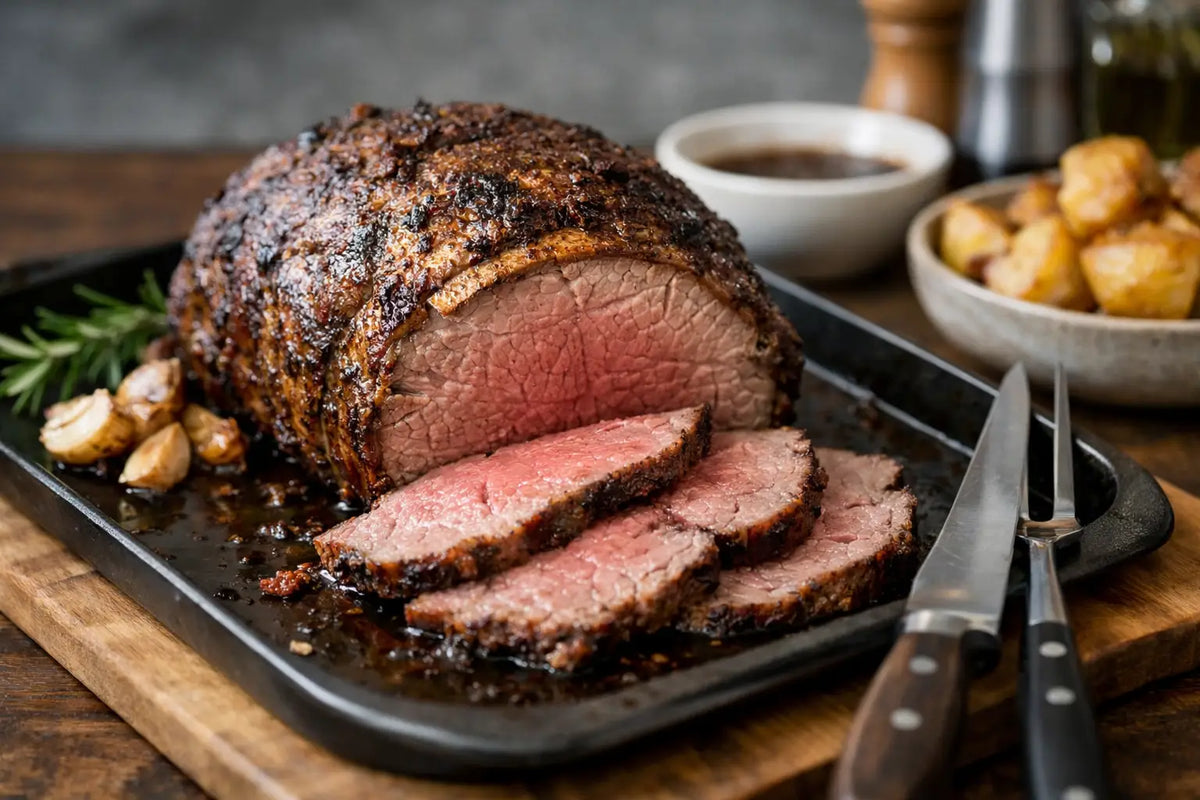
If there is one point every guide to roasting beef joints should hammer home, it is this: rest the meat properly. Carving too soon is one of the fastest ways to lose flavour and moisture. When beef comes out of the oven, the juices are still moving. Resting gives them time to settle back into the meat.
For most joints, allow at least 20 minutes of resting time. Larger joints can happily rest for 30 minutes or more. Loosely cover with foil, but do not wrap it tightly or you will trap steam and soften the outside too much. That little wait often makes the difference between slices that stay juicy and slices that flood the board.
Use that time sensibly. Finish the roast potatoes, make the gravy, warm the plates and get everything else ready. Resting is not wasted time. It is part of the cooking.
Carving and serving
Always carve against the grain where possible. That means slicing across the muscle fibres rather than along them, which gives you more tender pieces on the plate. A sharp carving knife makes a real difference here. Thick, ragged slices can make even a well-cooked joint seem tougher than it really is.
How thick you carve depends on the cut and the occasion. Sirloin and rib can take thicker slices nicely, while topside and silverside often suit thinner carving. If you have rested the joint properly, you should see clear juices and even colour through the middle rather than a grey ring around the edge.
Common problems and why they happen
If your beef turns out tough, the cause is usually either overcooking or carving it the wrong way. Lean cuts are especially unforgiving once pushed too far. If it is dry, the oven may have been too hot for too long, or the joint was not rested enough before carving.
If the middle seems underdone but the outside looks ready, the joint may have gone into the oven too cold, or the cut may simply be a thicker shape than your usual one. That is another reason thermometers are so handy - they remove the guesswork.
If your roast lacks flavour, the issue is often not seasoning but the cut itself. A very lean joint will not taste the same as a well-marbled rib, and that is not a fault, just a difference in style. It depends what matters most to you - rich flavour, easy carving, lower fat, or better value.
A butcher’s tip on buying better roast beef
A good roast starts before the oven is even on. Ask for a joint that suits how you like your beef cooked and how many people you are feeding. A proper butcher will steer you towards the right cut, trim it well, and tell you honestly whether it is best served pink or cooked through. That sort of advice saves both money and disappointment.
For families across Essex planning a Sunday dinner, a celebration meal or simply wanting better value from a quality joint, that bit of guidance can make all the difference. At Reed’s Family Butchers, that is exactly how we like to help - with straightforward advice, hand-prepared meat and no guesswork.
Roast beef does not need to be overcomplicated. Start with the right joint, cook with confidence, rest it properly, and let the quality of the meat do the hard work.

Share:
Why Fresh Meat Grays Need Care