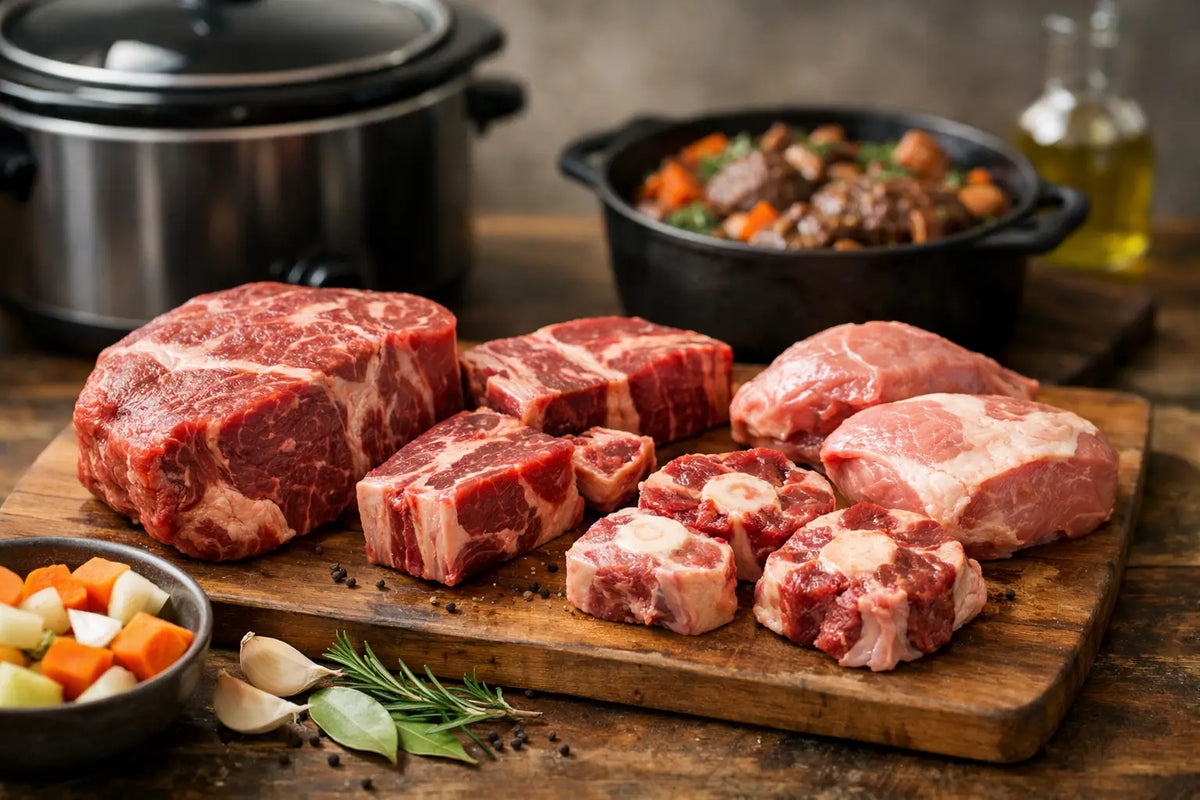
A good slow-cooked meal starts long before the casserole dish goes in the oven. It starts with choosing the right cut. If you have ever wondered which cuts are best for slow cooking, the short answer is this: the cuts that work hardest on the animal usually give you the best result. They may look less glamorous at the counter, but with time and gentle heat they become tender, rich and full of flavour.
That is why slow cooking has always made good sense in a proper butcher’s shop. It is economical, deeply satisfying and ideal for family meals. The trick is knowing which joints and cuts suit a long, steady cook, and which are better kept for quick frying, grilling or roasting.
Which cuts are best for slow cooking in beef?
Beef is one of the easiest meats to get right in a slow cooker or low oven, as long as you choose a cut with enough connective tissue and a bit of marbling. Lean, premium steaks may sound tempting, but they are usually the wrong choice. Given too many hours, they can dry out and lose the texture that makes them special.
For proper slow-cooked beef, chuck is one of the best all-round options. It comes from the shoulder, so it has done plenty of work and carries plenty of flavour. Cooked gently in stock, wine or gravy, it softens beautifully and gives you that rich, hearty finish people want from stews and casseroles.
Brisket is another favourite. It has a lovely deep beef flavour and slices well if cooked with care, but it can also be pulled apart once fully tender. Brisket suits pot roasting, braising and slow roasting, especially when you want a joint that feels a little more substantial than diced beef.
Shin deserves a mention too. It is one of the most flavour-packed cuts on the animal thanks to the muscle and marrow content. It needs time, so this is not one for rushing, but if you want a stew with proper body and richness, shin is hard to beat. The sauce often ends up better than the meat itself, which is saying something.
Skirt and feather blade also work well, though they are slightly less familiar for some home cooks. Blade has excellent marbling and becomes wonderfully soft. Skirt has a coarser grain and strong beefy taste, making it ideal for robust dishes where you want flavour to lead.
The best lamb cuts for long, gentle cooking
Lamb responds brilliantly to slow cooking because it carries its flavour so well. Even a simple dish with onions, stock and a few herbs can taste like you have spent far more on it than you actually have.
Shoulder is the standout cut for most slow-cooked lamb recipes. It has enough fat to keep it moist and enough connective tissue to break down into tender, pull-apart meat. Whether you are cooking a whole shoulder for Sunday dinner or using diced shoulder for a curry or hotpot, it gives a generous, full-flavoured result.
Shank is another classic. Lamb shanks need patience, but that is the point. A few hours in the oven with stock, root veg and seasoning turns them from tough to meltingly tender. They also make an excellent choice when you want a meal that feels a little more special without being complicated.
Neck fillet and scrag are very good value for stews and braises. They are less showy than leg or rack, but for slow cooking they often make more sense. Leg can be slow cooked too, but because it is leaner, it needs more care. Done properly it can be lovely, but shoulder is usually the safer choice if tenderness is the priority.
Which pork cuts come into their own when cooked slowly?
Pork is one of the most rewarding meats to slow cook, especially if you like soft, succulent meat with crisp edges or rich cooking juices. Again, the best cuts are not the leanest ones.
Pork shoulder is the clear winner for many dishes. It has the fat and structure needed for long cooking, and it is the go-to cut for pulled pork. Given enough time, it becomes tender enough to shred with a fork while still keeping a proper pork flavour. That balance of richness and texture is exactly what makes it such a family favourite.
Pork belly is another excellent slow-cooking cut. It has a higher fat content, so it is not for every meal, but when cooked slowly it delivers superb flavour. You can finish it at a higher heat to crisp the top, which gives you the best of both worlds - soft meat underneath and a bit of bite on the outside.
Cheek and collar are worth considering as well if you want something a little different. They are full of character and make excellent braises. Leg can be used in some slower recipes, but like lamb leg, it is leaner and less forgiving. For a moist result with less fuss, shoulder is usually the better bet.
Why cheaper cuts often taste better
There is a reason traditional family cooking has long relied on shoulder, shin, brisket and similar cuts. They need time, but they reward it. These muscles work harder, so they contain more connective tissue. During slow cooking, that tissue breaks down into gelatin, which gives meat its soft texture and gives sauces their rich, silky finish.
That is also why expensive quick-cook cuts are not always the right buy for this kind of meal. Fillet, sirloin, rump and lean loin cuts have their place, but long cooking can leave them dry and disappointing. Paying more does not always mean eating better. It depends on how you plan to cook it.
This is where a butcher’s advice makes a real difference. If you tell us whether you want to make a casserole, curry, pulled pork or pot roast, we can point you towards a cut that suits both the dish and the budget.
Slow cooker or oven - does it change the best cut?
In most cases, the same cuts are best whether you are using a slow cooker or a low oven. Chuck, brisket, shoulder, shank and shin all perform well in both. The main difference is the finish.
A slow cooker is convenient and excellent for busy households. It keeps things moist and steady, which is perfect for stews, curries and pulled meats. The trade-off is that you do not get much browning during the cook, so flavours can be slightly softer unless you brown the meat first.
A low oven gives you a bit more control over texture and reduction. Sauces can thicken better, and joints can develop more colour. It does require more attention, but for some dishes the extra depth is worth it.
So if you are asking which cuts are best for slow cooking, the answer does not change much by method. What changes is how much time you have and what sort of finish you want on the plate.
A few common mistakes worth avoiding
The biggest mistake is choosing meat that is too lean. It may seem healthier or tidier, but slow cooking needs a bit of fat and collagen to do its work. Without that, the result can be stringy rather than tender.
The second mistake is not giving it long enough. Slow cooking is not just about low heat. It is about enough time for the fibres to relax and the connective tissue to break down. A cut that still feels tough usually needs longer, not higher heat.
The third is under-seasoning. Rich cuts can take proper seasoning, and a good slow-cooked dish often benefits from onions, herbs and stock to build flavour gradually. Browning the meat first also helps, even if you are using a slow cooker afterwards.
Choosing the right cut for the meal you want
If you want a hearty beef stew, go for chuck or shin. If you want a pot roast that slices, brisket is a strong choice. For lamb that falls apart into rich, savoury strands, shoulder is hard to beat. For curries and braises, diced lamb shoulder, beef blade or pork collar all work well.
If your plan is pulled pork baps for an easy weekend meal, shoulder is the obvious answer. If you want a richer centrepiece, pork belly brings more indulgence. And if you want something that feels traditional and comforting, lamb shanks or beef brisket are always welcome on the table.
At Reed’s Family Butchers, this is exactly the sort of everyday advice we value - helping customers choose the cut that suits the cooking, rather than simply picking the most expensive joint in the cabinet.
The best slow-cooked meals are rarely about fuss. They are about choosing well, cooking gently and letting time do the hard work. Get the cut right, and dinner tends to take care of itself.

Share:
How Much Meat for a Family Freezer?
Why Ready Meals from Butchers Are Better