
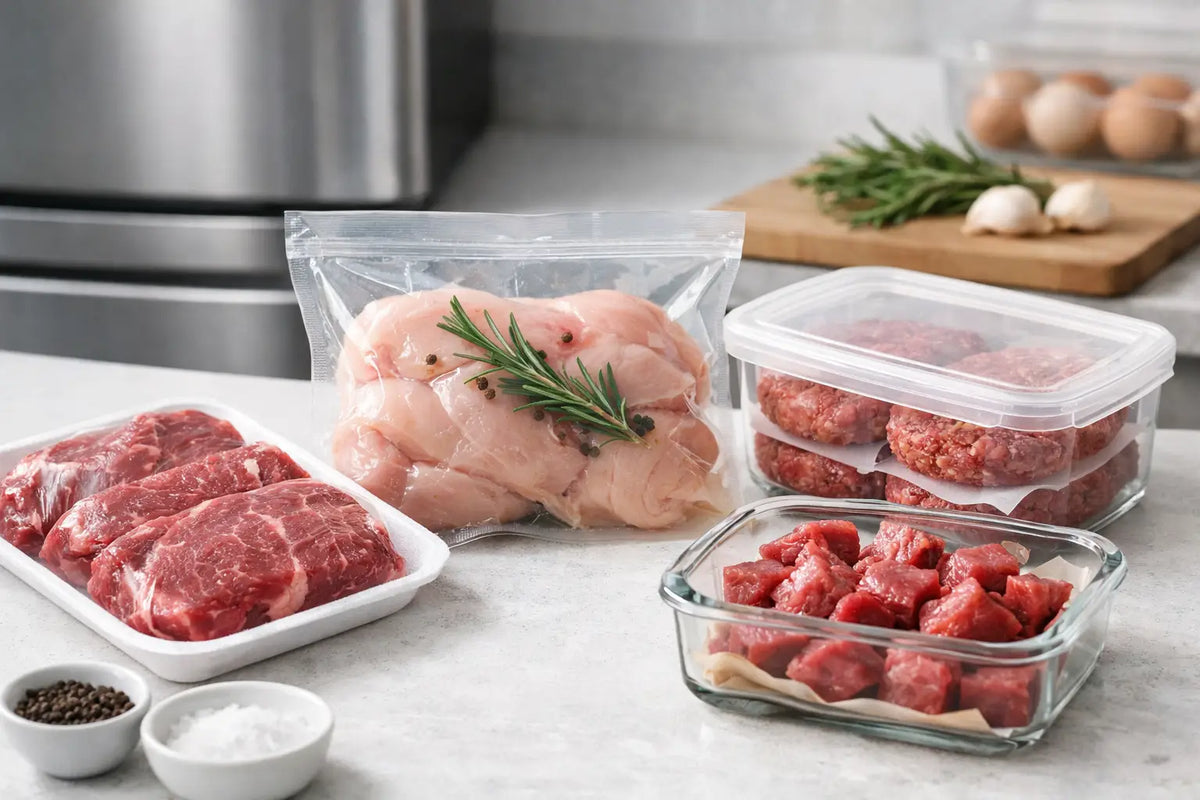
You can buy the best cut in the shop, but if it sits too warm in the car or gets shoved into an overpacked fridge, quality drops fast. Knowing how to store fresh meat properly is what keeps it safe to eat, helps it last as it should, and makes sure you get the flavour and texture you paid for.
At a proper butcher's counter, freshness is controlled from the start. At home, that job becomes yours. The good news is that it is not complicated. A few sound habits with temperature, wrapping and timing make all the difference whether you are storing steaks for tomorrow night, a roasting joint for Sunday, or a bulk order for the freezer.
How to store fresh meat in the fridge
Fresh meat should go into the fridge as soon as possible after you get home. If you are doing a larger shop, leave meat until last so it stays cold for longer. Once home, place it straight into the coldest part of the fridge, which is usually the bottom shelf towards the back. That area keeps a steadier temperature and reduces the risk of juices dripping onto ready-to-eat foods.
Your fridge should be set to 5°C or below, though closer to 1°C to 4°C is better for meat. If the fridge runs too warm, meat will spoil more quickly even if it still looks fine on the surface. An appliance thermometer is useful if you are unsure, especially in busy family kitchens where the door gets opened often.
Keep meat in its original butcher's wrapping if you plan to use it within the recommended time. Good wrapping is designed to protect the product while still letting it breathe where needed. If the packaging has become damp or loose, transfer it to a clean container or rewrap it well. The aim is simple - protect the meat, contain any juices, and stop cross-contamination.
Raw meat should always be kept separate from cooked foods, salad items, dairy and anything eaten without further cooking. That matters even more with poultry. A sealed tray or container underneath the wrapped meat is a sensible extra step, especially if you have a very full fridge.
How long fresh meat lasts
Storage time depends on the type of meat, the cut, and how fresh it was when bought. As a general guide, most fresh red meat such as beef and lamb will keep for around 2 to 4 days in the fridge. Pork is usually best used within 2 to 3 days. Chicken and other poultry are better cooked within 1 to 2 days.
Minced meat and sausages need a bit more care because they have more surface area exposed and can deteriorate faster. These are usually best cooked within 1 to 2 days as well. Offal is more delicate again and should be used very promptly.
Use-by dates should always be followed where they are given. If your butcher has advised a storage window at the counter, follow that advice first. Freshness can vary depending on preparation day, so a trusted butcher's guidance is worth more than guesswork.
Signs meat is no longer at its best
People often rely too heavily on colour alone, but colour can be misleading. Some meats darken slightly in the fridge without being unsafe, while others may still look acceptable after quality has started to slip.
The more reliable signs are smell, texture and excessive liquid in the pack. Fresh meat should smell clean and natural, not sour or unpleasant. If it feels tacky or slimy rather than simply moist, that is another warning sign. Poultry in particular should never have a strong odour.
If in doubt, do not take chances. Good meat is worth cooking properly, but not worth gambling on.
Freezing fresh meat the right way
Freezing is the best option if you are not going to use the meat in time. The key is to freeze it while it is still properly fresh, not when it is nearly past its best. Freezing pauses deterioration, but it does not reverse it.
Wrap meat tightly so it is protected from air. Air is what causes freezer burn, dries out the surface and affects eating quality. If the meat is already well wrapped, you can place that pack inside a freezer bag or airtight container for added protection. Press out as much air as you can and label it clearly with the contents and date.
Portioning before freezing is one of the handiest habits for busy households. Instead of freezing a large family pack all together, split it into meal-sized portions first. That way you only defrost what you need, whether that is two chicken fillets for a midweek tea or enough mince for a big batch of bolognese.
Leaner cuts tend to freeze very well. Steaks, diced beef, chicken breasts, chops and mince are all straightforward. Larger joints also freeze well if wrapped properly, though they take longer to thaw. Sausages and bacon can be frozen too, but they are best used within a reasonable time to preserve quality.
For best results, try to use frozen meat within a few months rather than forgetting it at the back of the freezer for half a year. It may still be safe longer than that if kept constantly frozen, but texture and flavour will not be at their best.
Defrosting without ruining the meat
The safest way to defrost meat is in the fridge. It takes longer, but it keeps the temperature stable and the meat in good condition. A small pack of mince or chicken fillets may thaw overnight, while a large joint can take a full day or two.
Put the meat on a plate or in a container while it defrosts so any liquid is caught. Once thawed, cook it within a day or so, particularly poultry and mince. Do not refreeze raw meat that has been fully thawed unless you cook it first.
Avoid defrosting meat on the kitchen side at room temperature. The outside can warm up into the danger zone while the middle stays frozen solid. That is when bacteria get the advantage. If you are genuinely short on time, use the microwave defrost setting and cook the meat straight away.
Common storage mistakes at home
One of the biggest mistakes is treating all meat the same. A beef roasting joint has different storage qualities from chicken thighs or pork mince. Timing matters. So does fat content, packaging and whether the meat has been cut, minced or marinated.
Another common issue is fridge crowding. If the fridge is crammed full, cold air cannot circulate properly. Meat may end up stored in warmer spots than you realise, especially near the door. Keeping the fridge tidy is not just about neatness - it helps it work properly.
Then there is the habit of buying for the week and hoping for the best. That can work well if you plan meals sensibly and freeze what will not be used in time. It works less well if everything stays in the fridge until you decide what you fancy on Friday.
Storage tips for bulk buys and family packs
If you like to stock up, get organised before the meat arrives home. Make space in the fridge and freezer, have freezer bags or containers ready, and think in meal portions rather than one big bundle.
This is especially useful for families, gym-focused meal prep, or anyone ordering a mixed meat pack. Separate chicken, beef, pork and lamb into the amounts you actually cook. Label everything clearly. It sounds basic, but there is a big difference between a tidy freezer that saves money and a mystery pile of frosted packs nobody wants to tackle.
If you are buying fresh from a local butcher, ask how long each item will keep and what is best frozen on the day. That advice can save waste and help you get the best value from your order.
How to store fresh meat for better quality, not just safety
Safety comes first, but quality matters too. Meat stored well cooks better. A steak kept cold and dry enough in the fridge will sear more nicely than one left sweating in poor packaging. A roasting joint frozen early and thawed carefully will hold its texture far better than one frozen as an afterthought.
That is where a proper butcher still makes a difference. Freshly prepared meat, sensible wrapping and honest advice give you a much better starting point than a rushed supermarket pick-up. If you are shopping with Reed's Family Butchers in Essex, that butcher's guidance is part of the value - not an extra.
Good storage is really about respect for the product. Put it away promptly, keep it cold, use it in good time and freeze it before quality starts to slip. Do that, and the meal you serve will taste as good as it should.

Share:
How to Choose a Roasting Joint
A Practical Guide to Butcher Meat Packs